Real double-entry books, kept as you work.
Every invoice, delivery, supplier bill, payment and till sale posts a balanced journal entry to your own ledger as it happens. Close the month, reconcile the bank and pull a balance sheet without exporting anything to another system.
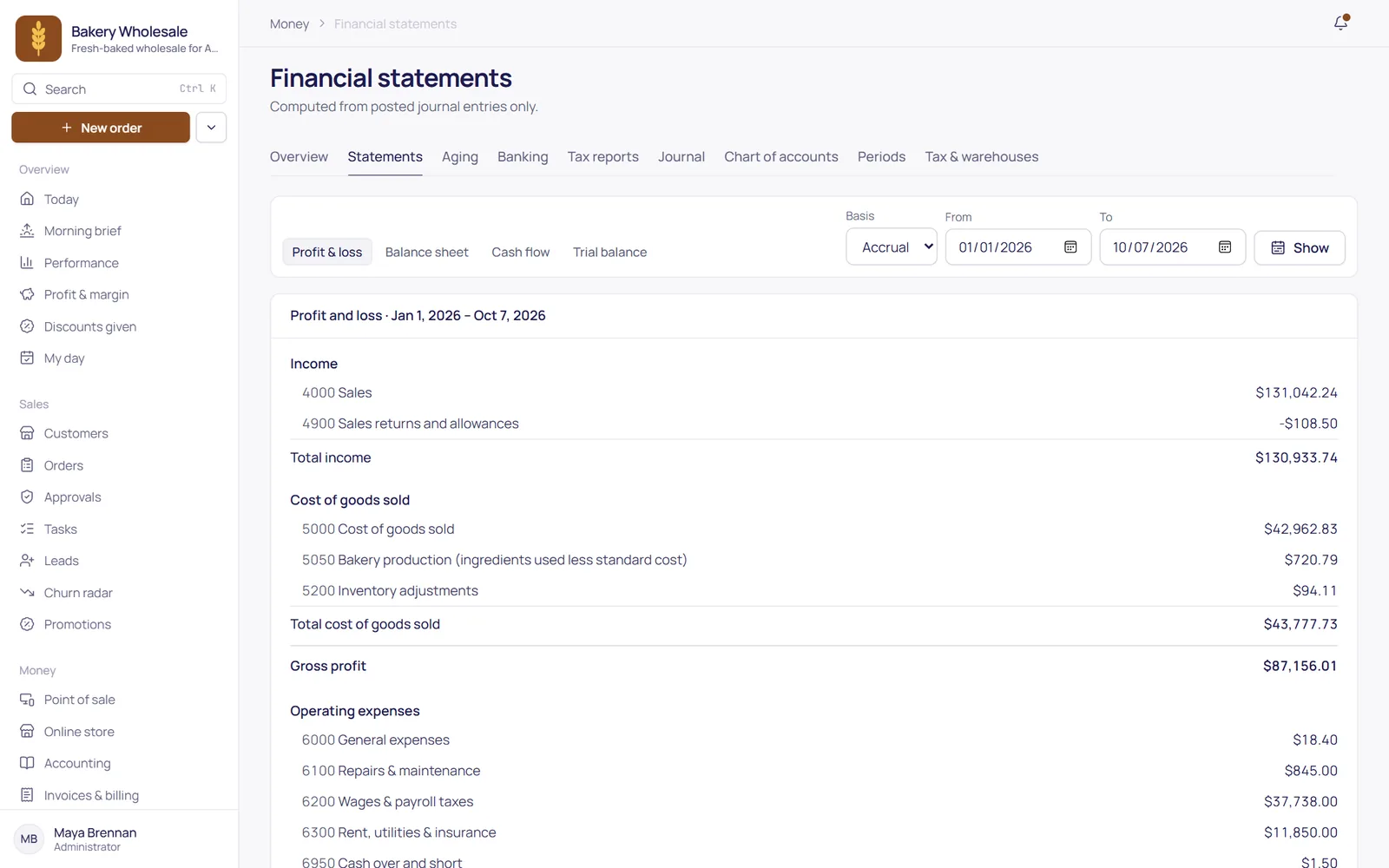
A ledger your accountant will recognize
A chart of accounts, monthly periods and journal entries, with the rules an accountant expects enforced by the database itself.
- Manual journal entries and reversals for accruals, corrections and opening balances.
- Monthly periods: close a month and it takes no new postings; reopen it if you need to.
- Unbalanced entries are refused, and posted entries can't be edited or deleted. Corrections are reversing entries, so the history stays intact.
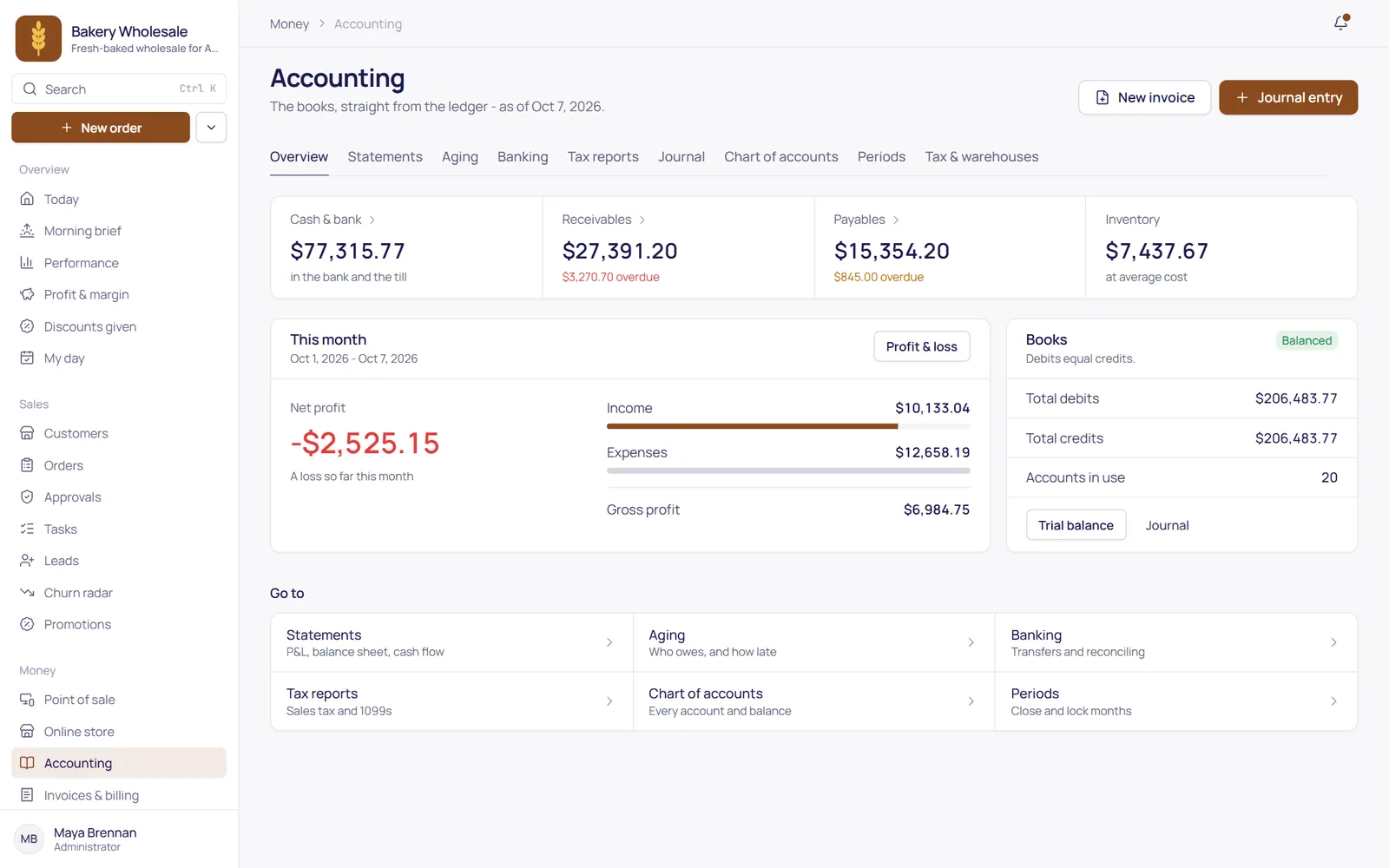
Statements straight from the ledger
The reports are read from the same ledger every document posts to, so they agree with each other and with your customer and supplier balances.
- Profit & loss, balance sheet, trial balance and a cash flow statement, for any period.
- A/R and A/P aging by due date, from each document's payment terms.
- Inventory valuation at moving average cost, from the stock ledger.
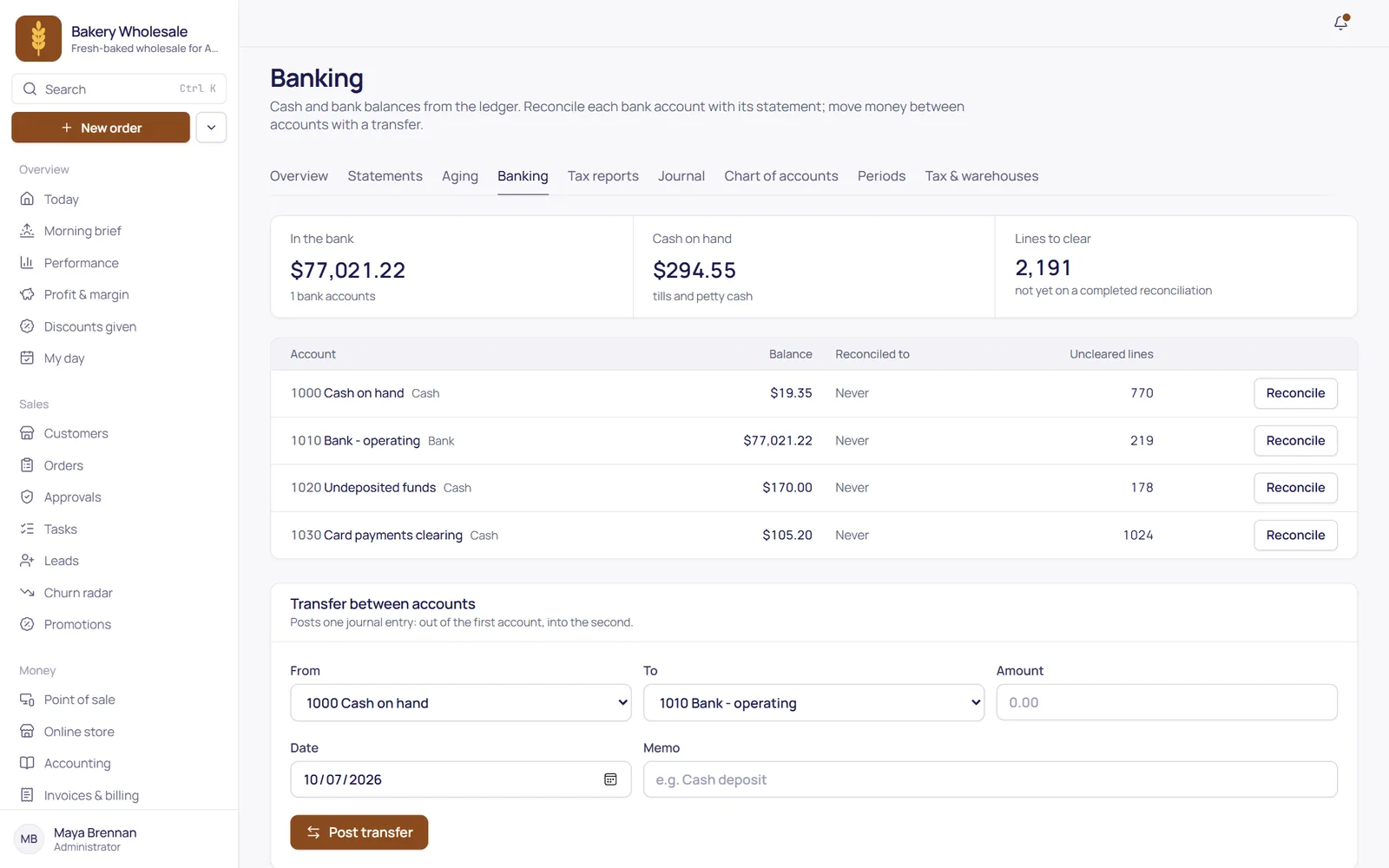
Cash and bank accounts, reconciled
Move money between your cash and bank accounts, then tick off the bank statement against what's in the books.
- Transfers between cash and bank accounts, posted once, even if the form is sent twice.
- Bank reconciliation with a live difference as you tick lines; it can only be finished at zero.
- Each line clears once: a payment reconciled last month can't be ticked again this month.
The details that matter.
Invoices, deliveries, bills, payments, stock adjustments and till sales each post one journal entry, exactly once.
Every account's movements with a running balance, back to the document behind each line.
The rate follows the customer, the ship-to address and the item; exempt customers (resale certificate on file, nonprofit, government) are never charged and each invoice records why. A sales tax report by state checks itself against the ledger. TranzSuite doesn't file returns; check your setup with your accountant.
1099-NEC totals per contractor for the year (card payments left out), with a CSV for your accountant, and profit & loss on a cash basis as well as accrual.
Due on receipt, Net 15, 30 or 60: due dates and aging follow them.
Document numbers are only used by documents that actually posted.
Bring in opening balances, open invoices and unpaid bills with the import center.
Accounting screens only for the people who should see them; reps, drivers and cashiers never see the books.
Who posted, reversed or closed what, and when.
Each company keeps its books in one currency, US dollars, today.